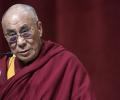
China is worried about the situation post the Dalai Lama and that his reincarnation could surface in Arunchal Pradesh, a region it claims as its own, but which is part of the Indian Republic, says former RA&W Additional Secretary Jayadeva Ranade.

Statements emanating from the recent Chinese Communist party congress suggest potentially increasing pressure on India with regard to the Dalai Lama and the Central Tibetan Administration in Dharamsala, notes former RAW officer Jayadeva Ranade.

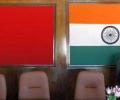
India on Tuesday outrightly rejected as 'senseless' China renaming some places in Arunachal Pradesh, and asserted that assigning 'invented' names does not alter the reality that the state 'is, has been, and will always be' an integral part of India.
India has been taking an "over-cautious" view on Tibet, the Dalai Lama today said while seeking New Delhi's help to resolve the vexed issue.
It is time for India to get out of its defensive mindset and timid approach in dealing with China. There are vital national security interests at stake. Relations with China must be handled from a strategic, not a legalistic, perspective.

Chinese Foreign Minister Yang Jiechi spoke over the phone to his Indian counterpart Pranab Mukherjee and exchanged views on bilateral relations, explaining Beijing's principled stand on the Dalai Lama issue. Mukherjee said the Tibet Autonomous Region is part of China's territory and India will never tolerate any political anti-China activities by Tibetans on the Indian territory. The conversation comes after China's State Councilor Dai Bingguo's telephonic talk with the NSA.

'The General appreciated the importance of history in understanding modern conflict.' Tibetologist Claude Arpi recalls his meetings with General Bipin Rawat.
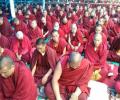
'Given Chinese sensitivity to anything to do with Tibet -- and the fact that in the 1950s it was the Tibet issue which led to the deterioration of India-China relations and the border war in 1962 -- India should be particularly careful in not triggering a Chinese reaction which it may not be able to handle,' says former foreign secretary Shyam Saran.

US special coordinator for Tibetan issues Uzra Zeya met the Dalai Lama in Dharamshala on Thursday and discussed the rich traditions of freedom and democracy in the United States and India.

"Repeating baseless arguments in this regard does not lend such claims any validity. Arunachal Pradesh was, is and will always be an integral and inalienable part of India. Its people will continue to benefit from our development programmes and infrastructure projects," he said.

The Battle of Lhagyala on November 23, 1962, fought by the 4 Rajput Regiment against the Chinese PLA, remains a forgotten chapter of heroism, with no survivors left to tell their story.

The people who know Tibet will continue to fight the good fight. Long, hard, less than hopeful, but always peaceful.
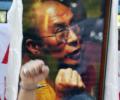
Should New Delhi sacrifice Tibet at the altar of its ties with Beijing or should it adopt a more pro-active stance on the issue?

China, which is building numerous villages in Tibet close to its borders with India and Bhutan, has held several celebratory events to mark its takeover of Tibet in the new border villages with a mix of border troops and the local population, the official media in Beijing reported.
'As a responsible law abiding nation, India has a moral responsibility to tell the truth that Tibet is an occupied country,' says Tashi Phuntsok.

The Dalai Lama's Arunachal visit is not likely to derail the relationship but it is enough to signal the Chinese that India is also willing to flash the Tibet/Taiwan card should the need arise, says Sana Hashmi.
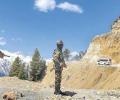
One hopes the new Lok Sabha will mark a break from a dismal tradition -- lack of interest in defence and security policies, argues Colonel Anil A Athale.

'Arunachal Pradesh was, is, and will always be an integral and inalienable part of India'

'Tibet remains a prickly issue between the giant Asian nations. China still claims more than 80,000 sq kilometres of Indian territory in the Northeast. Why? Just because Beijing refuses to acknowledge the McMahon line which separates India and Tibet, and this, simply because the 1914 Agreement delineating the border was signed by the then government of independent Tibet with India's then foreign secretary (Sir Henry McMahon),' says Claude Arpi.

Prime Minister Modi on Saturday dedicated to the nation the Sela Tunnel built at an altitude of 13,000 feet in Arunachal Pradesh that will provide all-weather connectivity to strategically located Tawang and is expected to ensure better movement of troops along the frontier region.
An article in The New York Times recently speculated that Beijing would try to legitimise its hand-selected (and therefore illegitimate) Panchen Lama, Gyaltsen Norbu, by sending him to study in the Labrang Monastery in Xiahe at the somewhat advanced age of 21.

The world must hang its head in shame for being a mute spectator to the 'cultural holocaust' in Tibet, says Major General Mrinal Suman (retd).
"We hope that India will proceed from the overall interest of our bilateral relations and honour its commitment," Chinese Foreign Ministry spokesman Qin Gang told a regular news briefing when asked if Beijing was satisfied with the Indian government's handling of protests by Tibetans. Qin said no country in the world had recognised Tibet as an independent country and, since ancient times, it had been an inalienable part of China.

Wing Commander Pratap Marathe's story is one of dedication, bravery, and humour, a shining example of the spirit of the Indian Air Force. Air Commodore Nitin Sathe (retd) salutes Wing Commander Marathe who passed into the ages last week.
Chinese nuclearisation of Tibet endangering ecosystem, says new book

'In Chinese perception, India is strategically getting closer to United States and some Chinese analysts fear perhaps one day it may become a part of American arrangements against China.'
If China keeps harping on Arunachal Pradesh and J&K, India must also rake up the issue of Tibet, writes Vivek Gumaste.

'We are developing infrastructure on the mountains and deploying the troops on hill borders in such a way that it is ensuring the safety of the people there.'

China on Friday inaugurated its second railway line in Tibet, built at a cost of $2.16 billion, close to Indian border in Sikkim, enhancing mobility of its military in the remote and strategic Himalayan region.

'Isn't it in India's long-term interests that Tibet-related issues do not remain a point of discord in Sino-Indian relations?' asks Ambassador M K Bhadrakumar.
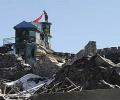
Public interest centres on whether the two leaders might make headway in resolving the Sino-Indian boundary dispute.
69-year-old Samdhong Rinpoche, who heads the administration of the Tibetan Diaspora, speaks out on the uprising in Lhasa, Chinese rule and India's role.
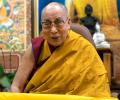
Though Beijing asserts the Dalai Lama's successor needs its approval, observers say it remains concerned as the present Panchen Lama, the number two spiritual leader who was appointed by it after unseating the boy nominated by the Dalai Lama, has not gained much traction in Tibet.

China, which claims Arunachal Pradesh as South Tibet, routinely objects to Indian leaders' visits to the state to highlight its claims. Beijing has also named the area Zangnan.

China will use airpower to support Pakistan from the start of a war. China will use the opportunity to at least take Ladakh. Its growing navy will prevent India from blockading or attacking the Makran Coast. And thanks to Chinese weapons, Pakistan keeps expanding its forces, observes Ravi Rikhye.
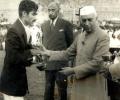
Colonel Billie Sodhi's life and family heritage reflect an unwavering commitment to excellence in polo, equestrian sports, and a rare, enduring athletic legacy.
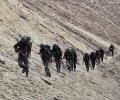
The government needs to answer the critical question of whether it has accepted any restrictions on its infrastructure creation activities, asserts Ajai Shukla.
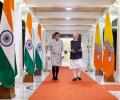
Although the special relationship might compel Bhutan to be considerate of Indian interests, new challenges will likely arise. An emerging new phase of relations will also call for fresh redlines between India and Bhutan, observe Harsh V Pant and Aditya Gowdara Shivamurthy.
